Identification of the different formations penetrated by a borehole is done initially by examining the data obtained during drilling. The following parameters are normally recorded: hook load, penetration rate, pump rate, mud flow, examination of cuttings, qualitative and quantitative examination of mud, oil, etc, or gas indices. Such data is often referred to as the "mud log" and is updated continuously during drilling.
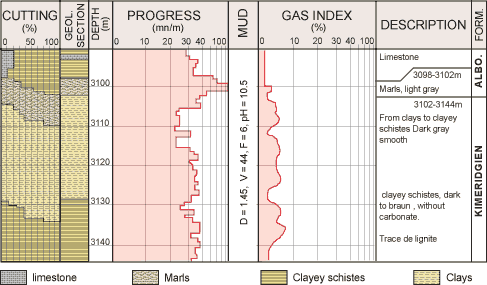
 Example of the mud logging
Such mud logging records are good general indicators of borehole conditions, but they all suffer from the fact that cuttings and fluid samples must travel from the bit, where they are drilled, back to the surface. It is difficult to accurately predict the time it takes for a given sample to reach the surface. This makes it difficult to assign accurate depths to samples. Random caving of previously drilled formations, which may mix with current samples, further complicates accurate correlation of data. Only continuous mechanical coring can provide the exact image of the succession of the geological layers and their physical characteristics. Borehole conditions may prevent complete recovery of the fully cored interval, especially in weak or fractured rocks. This factor, plus the high cost of coring as depth increases means that most drill holes are not cored